- Expand your understanding through self-learning: Being conscious is your initial form of protection. Educate yourself on typical phishing strategies and indicators in emails, messages, or phone calls. Maintain a skeptical attitude towards uninvited appeals for personal or financial data.
- Authenticate the sender's identity: To ensure your safety, it is important to authenticate the sender before engaging with any links or attachments. Thoroughly assess email addresses, domain names, and the originating phone number of the received message. Remain vigilant regarding subtle alterations in domain names or uncommon symbols.
- Employ Multi-Factor Authentication (MFA): Make sure to enable MFA on as many platforms as you can, with special emphasis on email and financial accounts. By incorporating MFA, you will have an added level of protection that necessitates the input of a temporary code sent to your phone or email, along with your password.
- Ensure that the software is always up to date: Make sure to keep your operating system, antivirus software, and web browsers up to date. Frequently updating them will help protect against cybercriminals who take advantage of vulnerabilities.
- Generate passwords that are both strong and unique: Make sure to generate robust and intricate passwords for all your online accounts, and refrain from using the same password for multiple websites. It is advisable to utilize a trusted password manager for securely storing and creating passwords.
- Set up a Phishing Filter: Several email platforms and web browsers include integrated phishing filters that can be activated to enhance security measures, effectively identifying and preventing potential phishing attacks.
- Keep yourself informed and in the loop: Ensure you are well-informed about the latest phishing trends and techniques by subscribing to cybersecurity news sources and keeping track of updates from reliable organizations.
Phishing Prevention: How To Safeguard Your Online Security
In the digital age, online security is a growing concern for individuals and businesses alike. Cybercriminals are constantly devising new tactics to obtain sensitive information from unsuspecting victims, and one of the most common methods they use is phishing.
Phishing is an attempt to fraudulently obtain sensitive information, such as passwords and credit card numbers, by disguising as a trustworthy entity in an electronic communication. It is a prevalent and dangerous threat that can have dire consequences for those who fall victim to it.
Grasping the Concept of Phishing:
Phishing involves cyber attackers pretending to be legitimate entities in order to trick individuals into compromising their security by taking certain actions.
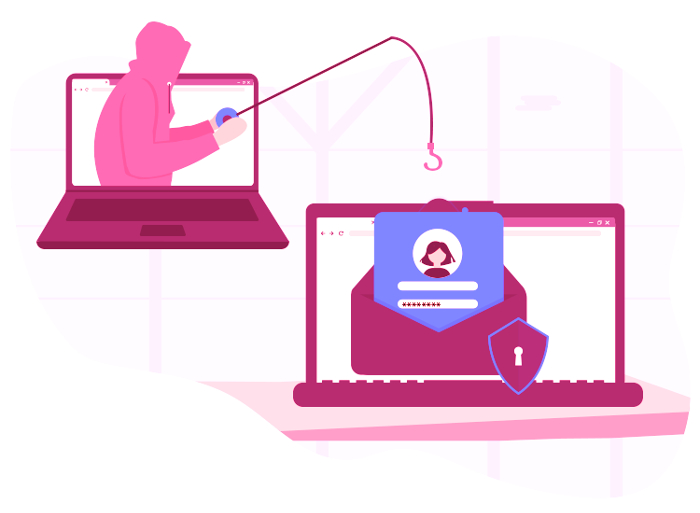
Phishing attacks encompass a range of tactics that frequently entail revealing sensitive data such as login credentials, credit card numbers, or personal identification details. These deceptive methods can take on diverse forms, including email phishing, SMS phishing (smishing), voice phishing (vishing), and even social media phishing.
The Mechanics of Phishing:
1. Email Scamming:
Attackers employ the most prevalent phishing technique by crafting deceitful emails that mimic reputable sources like banks, government bodies, or renowned corporations. These messages frequently comprise pressing appeals, tempting propositions, or distressing menaces to manipulate recipients into interacting with malevolent links or downloading corrupted attachments.
2. Smishing:
Smishing, similar to email phishing, encompasses the practice of sending deceptive text messages with the intention of deceiving recipients into clicking on hyperlinks or divulging confidential information.
3. Vishing:
Phone calls serve as a tool for attackers to deceive victims by posing as trusted individuals and convincing them to disclose sensitive information through telephonic means.
4. Social Media Phishing:
Fraudsters establish counterfeit profiles or pages on social media platforms, masquerading as reliable individuals or organizations. Subsequently, they employ these profiles to interact with prospective victims and tempt them into disclosing personal information.
Protecting Your Online Safety:
In today's interconnected world, safeguarding your online security is of utmost importance to defend yourself against phishing attacks. Here are some effective strategies to ensure your protection:
Visit PhishProtection Here
PhishProtection
5965 Village Way Suite 105-234, San Diego, CA 92130.
Phone: +1-855-647-4474 (USA) , +44-808-168-7042 (GB)
To end with In today's highly digitized world, cyber attacks continue to be a significant threat to individual and corporate online security. Phishing attacks are on the rise, and it is essential to take necessary precautions to protect your sensitive data from falling into the wrong hands. By following the prevention strategies discussed in this blog post, you can safeguard your online security and stay protected against phishing attacks. phishprotection.com is a valuable resource for learning about phishing.